Member Achievement | Michael Morris: Tribal:How the Cultural Instincts That Divide Us Can Help Bring Us Together
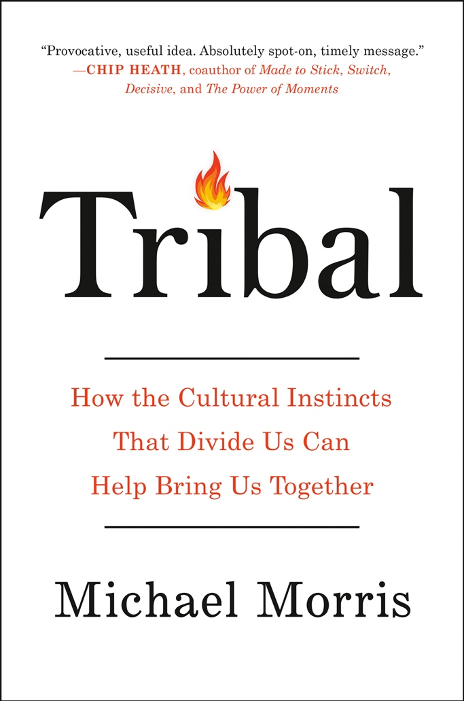
Tribal
How the Cultural Instincts That Divide Us Can Help Bring Us Together
Michael Morris
A revelatory, paradigm-shifting work from a renowned Columbia professor arguing that tribal psychology is our best hope for social change
Tribalism. It’s been named the culprit behind everything that’s wrong with the world today, from political polarization to failure to combat climate change. But tribal needn’t be a dirty word. Civilization, literacy, technology, science, and art—all are made possible through groups of individuals seeing through the lens of a shared culture. Tribalism is as necessary to the human condition as breathing.
As eminent cultural psychologist Michael Morris shows in this groundbreaking book, our tribal psychology is wired by evolution in three distinctive ways:
- The peer instinct to imitate and conform to what most people do.
- The hero instinct to contribute by emulating those held in high regard.
- The ancestor instinct to carry forward the ways of prior generations. These instincts create shared habits, ideals and traditions.
Through their interplay, a community’s stock of shared knowledge accumulates over generations and adapts to its environment.
Weaving together new discoveries about the role of culture in human thinking and striving with illustrative stories from history, business, and politics, Morris cuts across conventional wisdom to completely reframe how we think about our so-called “worst” instincts. If we sincerely seek to understand how individual behavior is shaped by culture—and how cultures can change—we must recognize our tribal nature for what it is: a powerful force that can unite nations, heal rifts, and spark change.
Early Acclaim for TRIBAL
“A riveting read that will challenge you to rethink your core beliefs.”
— Adam Grant, bestselling author of Hidden Potential, host of Re:Thinking, and Wharton Professor
“Provocative, useful idea. Absolutely spot-on, timely message.”
— Chip Heath, author of The Power of Moments and Professor of Organizational Behavior, Stanford
“Tribal challenges the conventional wisdom around culture and offers a vision for collective change that can bring about a better future for all of us.”
— Arianna Huffington, author of Thrive and founder of HuffingtonPost
“There is no future, good or bad, without tribalism. This eye-opening book will change the way you think about why we behave the way we do.”
— Scott Galloway, author of The Algebra of Wealth, Professor of Marketing, NYU
“Brilliantly, Michael Morris flips the script on the impact of tribalism in modern life.”
— Robert Cialdini, author of Influence and Pre-suasion, Professor of Psychology, Arizona State
“This original book lays bare the facts about our tribal natures and shows how the deeply human tendencies that have brought us to the precipice of disaster might still be used to save us. Penetrating, illuminating, and not to be missed!”
— Daniel Gilbert, author of Stumbling on Happiness, Professor of Psychology, Harvard
“You’ll tear through it and realize that you’ve learned something that changes your understanding of human nature, nurture, and their fascinating interplay.”
— Amy Cuddy, author of Presence, Professor, Harvard Business School
“An extremely useful guide to how cultures – from informal clubs to nation states – operate and how they can be changed.”
— Richard Nisbett, author of The Geography of Thought, founder of the Culture and Cognition Program, University of Michigan
“A consummate storyteller and astute observer, Michael Morris has written a masterpiece.”
— Sonja Lyubomirsky, author of The How of Happiness, Professor of Psychology, UC-Riverside
“An anthropologist examines ways in which ingrained notions of belonging and difference can be put to work for the good…useful lessons on cultural accommodation and coexistence.”
— Kirkus Reviews
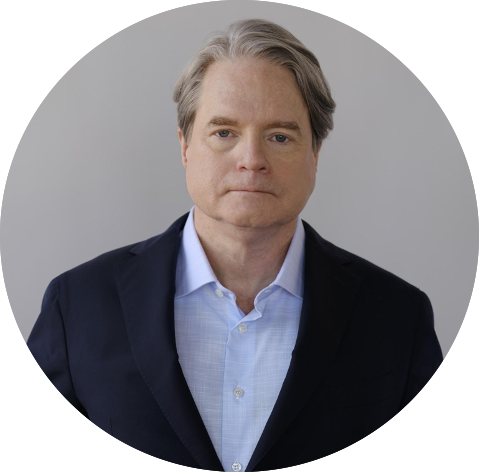
Michael Morris is the Chavkin-Chang Professor of Leadership at Columbia Business School as well as a Professor in its Psychology Department. Outside of academia, Professor Morris has consulted with and conducted executive training workshops for hundreds of clients across the globe, including Fortune 100 firms, governments, and the Obama and Clinton campaigns. Michael Morris has won the 2025 International Association for Chinese Management Research (IACMR) Distinguished Scholarly Contribution Award. He lives in New York City.
Key Takeaways from TRIBAL
TRIBAL breaks down the basic ways of harnessing cultural codes using the framework Morris developed in his many years teaching at Stanford Business School and Columbia Business School. He’s field tested his approaches consulting for countless organizations struggling with diversity, globalization, generational transition, and other challenges; for presidential campaigns and their policies and messages; and the Pentagon seeking to develop more dynamic conceptions of culture to guide military decision-making.
Reclaiming the meaning of “tribalism”
- Human tribal instincts are not bugsin the system that hinder an otherwise intelligent species; they are the distinguishing features of our kind that enabled its evolutionary ascent through creating rich cultures and they still drive many of our greatest achievements today.
- Cultures are not fixed; they evolve and change. Pundits tend to talk about cultural patterns as unchanging (and unchangeable). They reify culture and essentialize it. But in reality, the shared patterns that distinguish human groups are mutable and malleable. Cultural patterns surface in some contexts but not others. People pick up new cultural identities throughout their lifetimes, internalizing new codes with each new community that nurtures them. The culture of a given community evolves as each new generation learns the ways of the group.
- Leaders spur collective action by triggering tribal drives: the pull to mesh with peers, the drive to be a hero, and the ache to maintain traditions. These three basic tribal instincts elucidate many of the mysteries of leadership.
- We can all be changemakers. We don’t just internalize signals from the peers, heroes, and ancestors of our tribe. We also send signals, whether intentionally or not. You will be a peer, a hero, and an ancestor to others, so your actions will inform their conception of what is normal, what is praiseworthy and what is traditional in their community. And these conceptions guide their actions.
- When we interact as communities, our actions bend toward the common good. Our capacity to evolve new cultural codes in response to new environments is endlessly surprising and should be a source of hope even in the most difficult times. One thing is certain: we will not overcome the present challenges as individuals. As even our earliest ancestors knew, we can thrive only together–in tribes.”
- At a time of ethnic strife, pandemics, and climate crisis, our human capacity to act collectively is more important than ever. Our tribal instincts are our greatest tool for group cooperation; we should not fear them but learn to harness them.
Three tribal instincts. Our evolved group psychology is made up of three layers of “tribal instincts.” They evolved in the Stone Age, but we can still recognize them in our social impulses today. evolved systems today.
- Peer instinct: our sideways glances at classmates, coworkers, and neighbors–our impulse to mesh with their patterns.
- For most people, the inner conformist is stronger than the inner activist, and successful changemakers do their best to work with, not against, this basic human instinct.
- Our sensitivity to information about peer patterns is typically portrayed as a bug rather than a feature, but it’s a foundation of culture AND of cultural evolution.
- Hero instinct: our upward attention to corporate chiefs, celebrated athletes, and heralded inventors–our notions of making a contribution and aspirations for esteem and tribute.
- It encodes what the most respected people do and stirs aspirations to emulate them. It involves aptitudes for intuiting the group’s ideals and aspirations to uphold them.
- ‘Heroes’ sometimes become explicit role models, but before that they are beacons of public approval who show us paths to glory. This adaptation, sometimes called ‘prestige learning,’ is why we get pulled in by clickbait about what CEOs eat for breakfast and by ‘human interest’ articles about whether a politician wears boxers or briefs
- Ancestor instinct: our backwards gazing nostalgia for the ways of past generations, the comfort we find in traditions and the obligation we feel to maintain them.
- We can recognize it in our fascination with ancient rites, antiquarian documents, and even antique furniture; our keen curiosity about founders of our national, religious, and organizational tribes; and our zeal to keep alive religious rituals, holiday routines, and original recipes.
- Leading change is not all about the future–it also requires a hands-on relationship with the past. Leadership isn’t primarily rational; it touches on mythmaking, ritual, and nostalgia. Leaders who want to create changes (or avoid changes) share narratives about the continuity of a current plan with a suitable part of the remembered past. A community’s sense of its history and defining traditions evolves as new narratives are promulgated.
When change spreads, and when it fizzles out. Understanding tribal instincts helps us understand why attempts to deliberately change deep cultural patterns usually fail. But some succeed. Strategies that address different layers of a cultural pattern in sequence can succeed through creating momentum.
- ‘Grassroots movements’ – or bottom-up progression of change. Why smoking bans in New York City worked but Occupy Wall Street fizzled out.
- ‘Shock therapy’ – or top-down progression of change. Why Ellen Pao’s attempts at culture change at Reddit failed but Marry Barra’s worked at General Motors.
Toxic tribalism and its antidotes. Morris examines contemporary conflicts involving group loyalties –political gridlock, racial discrimination, and sectarian strife–and challenges media tropes about a resurgence of primal tribal hate.
- The trope of toxic tribalism, as theorized by many political journalists, makes for successful punditry but not necessarily for accurate understanding or practical solutions to the problem.
- At the most basic level, humans have solidaristic impulses to unify, help, and preserve their groups. These instincts can contribute to dynamics of conflict or tribalism, but this is not the atavistic return of a primal rage. Conflicts can escalate to hostility, but assuming that they start from hostility is inaccurate and unhelpful.
- For a better understanding of the pressing group conflicts of our time, and the role of our evolved group psychology within it, we should focus on the three basic tribal instincts. These are the psychological systems for meshing with peers, helping the clan, and maintaining the tribe. These drives have helped human groups survive from the Stone Age to today because they guide constructive collaboration. If we were wired to focus on other groups and reflexively hate them, we would never have come so far as a species.
- Each tribal instinct responds to distinctive triggers and signals. Morris suggests ways to allay the partisan conflict in our politics, the ethnic injustice in our workplaces, and the violent conflicts over religion through the triggers and signals of the underlying tribal instinct.
Practical applications:
Cultural change can be contagious. Discover how South Korea’s struggling soccer team transformed under a cryptic Dutch coach, reaching the semi-finals of the 2002 World Cup. This phenomenon, known as the “Hiddink Syndrome,” shows how a manager can harness cultural identities and redirect them. Learn how cultural changes to one visible group can ripple outward to reshape organizations and societies.
Cueing norms of prosperity. Explore how Singapore transformed from an impoverished island to one of the healthiest and wealthiest nations within a generation. Prime Minister Lee Kuan Yew used biculturalism and situational cues to displace habits of graft with “free port” norms. Discover how the cultural dimension of corruption and other behavioral syndromes is critical to sparking change.
Activating ideals of inclusiveness. Understand how Rev. Martin Luther King Jr. mobilized millions for the Civil Rights movement with one speech. By alluding to iconic national symbols like Lincoln’s memorial, the phrase “all men are created equal,” and the American Dream of a better life for one’s children, he invoked ideals that his broad audience already embraced. See how resonant symbols can motivate aspirations towards a common goal.
Triggering traditions to inspire. Learn how Joan of Arc inspired French troops to turn the tide of the 100 Years War. Through religious ceremonies and folk traditions, she changed their take on the conflict, transforming a territorial spat into a holy war. Understand how experiences of rituals and existential threats spur mindsets that are powerfully motivating but potentially dangerous.
Social information shifts cultural habits. See how the Prohibition era in the US illustrates the interplay of peer perceptions and cultural norms. The temperance movement and the repeal campaign both aimed to shift Americans’ perceptions of public opinion. Understand how the tool of prevalence signals to shift perceived norms and the habits of life they undergird.
Admired characters instill cultural ideals. Discover how telenovelas in Brazil inadvertently increased family planning–and how serial dramas became used around the world to promote health-related cultural changes. This illustrates the tool of prestige signals: how admired figures can reshape people’s ideals and their ensuing life choices. Learn why some celebrity and influencer campaigns change people’s preferences and decisions while others fall flat.
Conferring legitimacy through continuity. Uncover why Americans credit the Pilgrims with Thanksgiving, even though the holiday was established centuries later by Abraham Lincoln, to soothe the national divide of his time. Understand how casting activities as continuous with the collective past can infuse them with meaning, identity, and felt obligation.
Campaigns for deep cultural change. Deeply ingrained cultural patterns involve shared habits, ideals and institutions. Attempts to change them usually provoke active resistance. Discover how a Senegalese NGO found a formula to foster grassroots movements against female genital cutting. Through women’s empowerment workshops, thousands of communities have gradually transformed their habits, their ideals, and ultimately their institutions.
Bridging the red and blue tribes. Examine why the two major political parties, Democrats and Republicans, have become so polarized. When partisan in-groups come to prevail in our information processing, the result is epistemic tribalism–tribe comes before truth. Learn how recognizing the peer-instinct processes involved can help to break out of vicious cycles and foster bipartisan discourse and cooperation.
Re-thinking workplace discrimination. Why does racial discrimination remain rife even as racial animus has waned? While it’s intuitive that discrimination can arise from hostility toward out-groups, it can also arise from favoritism toward in-groups. In recent years, organizational policies have amplified in-group favoritism in hiring, creating an ethical tribalism of white privilege. Understanding hero-instinct motivations suggests new strategies for promoting ethnic inclusion.
Soothing Sectarian Strife. Given that religions preach peace, why are sectarian conflicts so bloody? Religions are deep traditions, meaningful to insiders but threatening to outsiders. Ceremony catalyzes traditionalism, and existential threat can transmogrify this impulse from one of preservation to one of destruction. These ancestor-instinct processes offer ways to de-escalate and defend against this dangerous dynamic of existential tribalism.